
World Cup Products Fans Will Be Buying in 2026
The 2026 FIFA World Cup is set to be the biggest money-making moment in the tournament’s history, and for ecommerce sellers, the time to act is now. With 48 teams, 104 matches, and 16 host cities across the US, Canada, and Mexico, this edition is bigger than ever. FIFA expects $11-14 billion in commercial revenue, nearly double that of Qatar 2022. If you run a Shopify store, the real question isn’t whether people will buy. They will. It’s what to stock, which searches to target, and how to ship without getting stuck in payment holds. This guide covers it all: the World Cup products selling fastest, the apps that keep your store running, and a plan for the six-week window.
Why World Cup 2026 Is the Biggest Ecommerce Event of the Decade
The numbers make the case on their own. World Cup merchandise sales are expected to hit $5 billion this cycle. The global football jersey market sits at roughly $8.7 billion in 2026. The souvenir market alone should reach $3.2 billion worldwide, with tourists making up 65% of those sales. FIFA estimates the event will add $40.9 billion to global GDP, and the U.S. accounts for $17.2 billion of that.
But the real story for sellers is location. For the first time, the tournament is happening inside North America’s huge online shopping market. The same shoppers who already buy everything from groceries to gear online are now typing “World Cup stuff” into search bars by the millions.
Amazon noticed. It launched a “Summer of Soccer” hub built around all things World Cup. When a retailer of that size makes that kind of move, it tells you online shopping for FIFA gear has gone mainstream in the U.S.
The search data backs this up. Since April 2026, World Cup keyword searches have jumped 3 to 5 times. The biggest clusters sit around “FIFA World Cup 2026,” “World Cup streaming,” and “Panini 2026 / World Cup stickers.” That last one spiked hard with low competition, which points to a small but eager group of buyers. Morgan Stanley adds that 44% of U.S. consumers plan to take part in matches or related events.
Here is what that means for you. Demand this big pulls in a lot of sellers, so the stores that set up early grab the cheap traffic before competition heats up. Wait until the group stage starts, and you are fighting for attention against everyone else who waited too. The smart play is to build your catalog now and let it gain traction.
What People Are Actually Searching For
Knowing what shoppers type is the difference between a product that sits and one that sells out. These are the search terms heating up before kickoff.
“World Cup Stuff”
This broad term comes from casual fans buying on impulse. They want to feel part of the moment, but they don’t know exactly what they need yet.
If you target this search, think in bundles. Fan kits, watch-party sets, and decoration packs work better than single items. A kit with a T-shirt, mini flag, face paint, and scarf raises your average order value. It also matches the vague, “just give me something” feeling behind the search.
“Soccer World Cup Stickers”
This is the most surprising trend of the 2026 cycle. Panini released its 2026 FIFA World Cup sticker album, the largest in the 56-year history of its World Cup sticker collection. It holds 980 stickers, including 68 special editions.
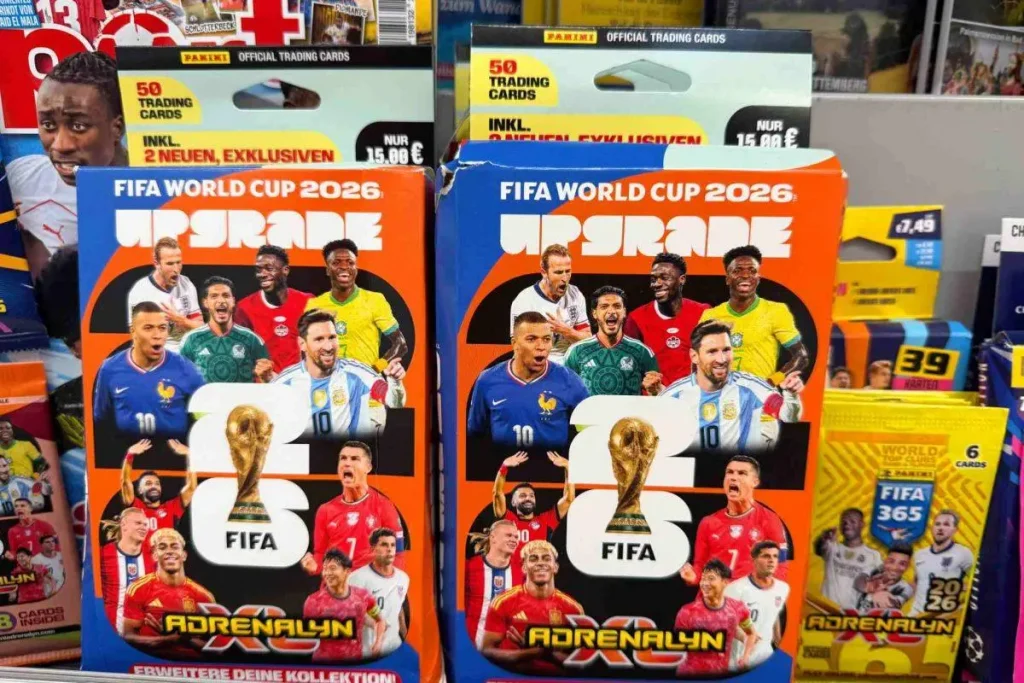
Sticker packs sold out within a week of their early-April launch, which Panini America called unheard of in past World Cups. The New York Times covered the collecting craze in Argentina, where fans treat it as immune to the digital age. NPR reported rising demand in U.S. spots that never cared much before, like Arizona and the Pacific Northwest.
For sellers, stickers open two doors. You can sell the physical albums and packs as their own product line. You can also use a sticker-album look in your apparel and accessory designs. The global market for these stickers is set to grow more than 18% year over year, and North America makes up about 45% of current orders.
“FIFA World Cup Product” and “World Cup Merchandise”
These searches come from people who already know what they want. They are ready to buy.
Listings for these terms should lead with the perks: personalization, fast shipping, and the fan experience. Add strong product mockups so buyers can picture the item. Close to 40% of online buyers now prefer custom gear over plain replicas. So a store that offers name-on-the-back jerseys converts much better than one selling generic designs.
Top World Cup Products to Sell Right Now
1. Fan Apparel: Jerseys, T-Shirts, and Hoodies
Football jerseys top the product list every cycle. National team shirts, retro jerseys, and custom fan apparel all sell well. Personalized versions beat generic ones every time.
T-shirts carry the highest search volume and the longest selling window. Fans buy them from opening-day watch parties all the way to the final. Hoodies act as a year-round soccer piece that keeps moving from the early rounds through the last match. They work for stadium crowds and couch viewers alike.
If you sell print-on-demand, name-and-number personalization is your best bet. The customer types in their own name and number for the back of the shirt. It is the top seller of every tournament, and it carries no trademark risk because the buyer supplies the details.
Price your shirts in a mid-range tier. Fans expect to pay more than a plain tee but less than an official licensed jersey, so that gap is your sweet spot.
2. Flags, Banners, and Home Decorations
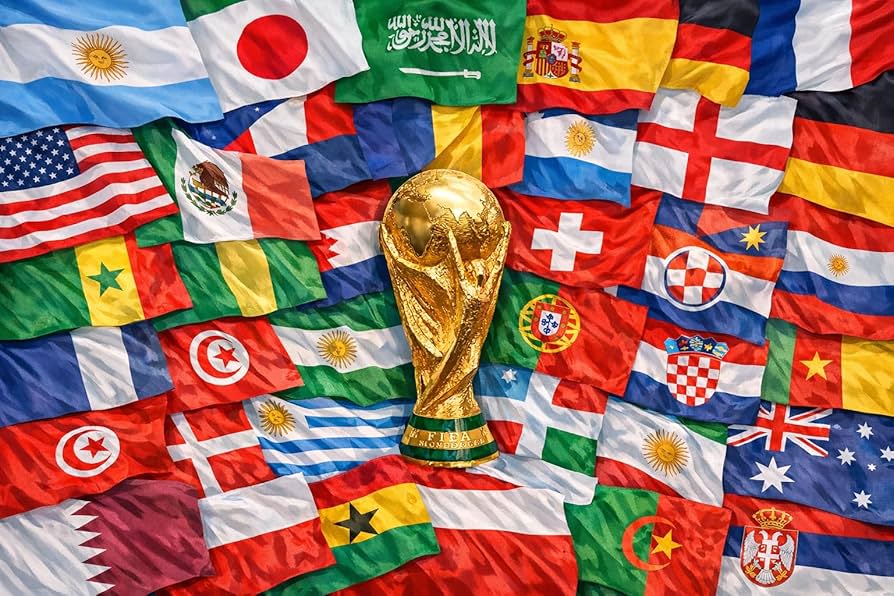
Fans love dressing up their homes, cars, and watch-party spots. That makes decorations one of the most impulse-driven categories of the bunch.
Country flags, LED football lights, wall banners, car mirror flags, and party packs are cheap to make and easy to share online. Wall art and posters tied to host cities also sell well. Think “Miami 2026” or “NYC Final” prints that fans keep as souvenirs after attending a match in person.
3. Watch Party Accessories
The World Cup drives huge demand for group-viewing gear, especially in the U.S. Many matches will air during evening prime time, so people will gather to watch them together.
Portable projectors, mini Bluetooth speakers, snack trays, beer accessories, and folding chairs all trend here. Fans are expected to drink more than 1 billion pints of beer worldwide during the tournament season. That number shows just how central the watch party is to how people enjoy this event.
Drinkware deserves its own mention. Mugs and tumblers are watch-party staples, and they make strong gifts across all 48 nations’ fan bases. Personalized, country-themed mugs rank among the best-converting print-on-demand items every cycle.
4. Sticker Albums and Collectibles
The Panini 2026 album covered earlier is the largest collectible ever made for a tournament. You can find the album and packs at major stores like Walmart, Target, Amazon, Walgreens, and Dick’s Sporting Goods.
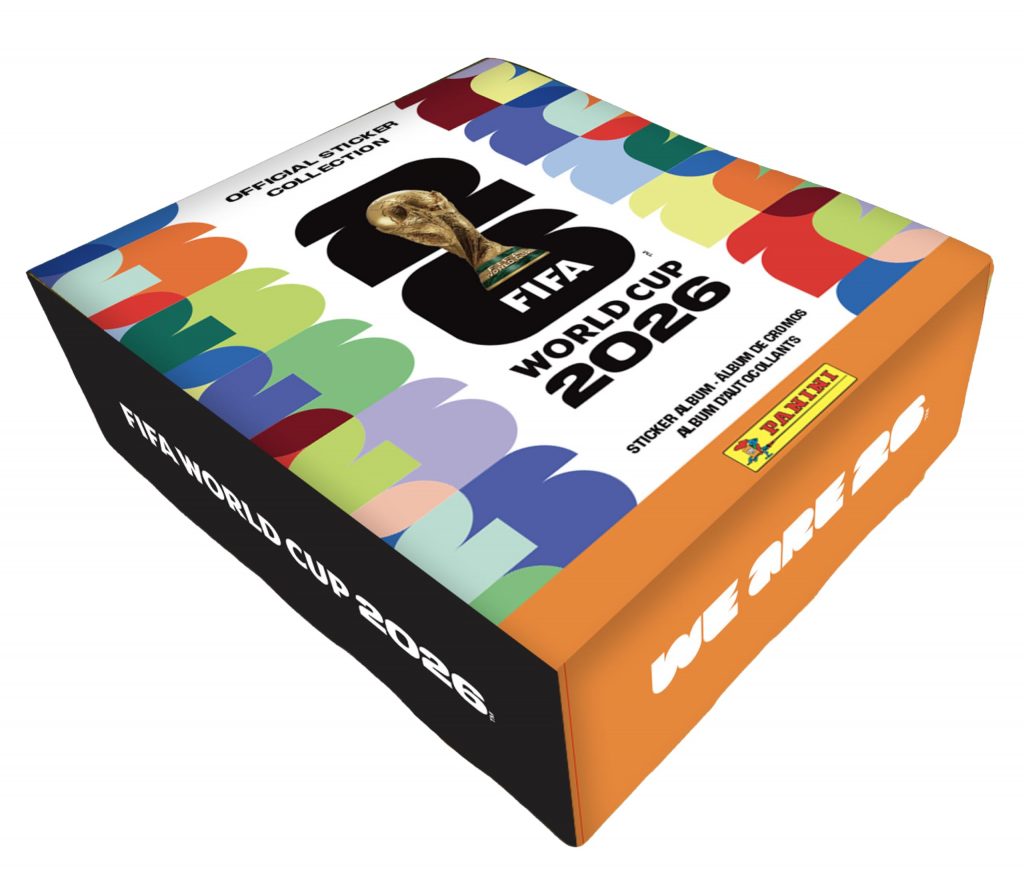
For collectible shops on Shopify, this category pays off. Collectors often buy several packs at once, which lifts your average order value. They also come back again and again while trying to finish their albums.
To make the most of these repeat buyers, offer multi-pack deals and a simple album bundle. Collectors chasing a full set are some of the most loyal customers you will ever find.
Panini is also embracing digital collectibles. Through a partnership with TikTok, fans can unlock 144 digital trading cards inside TikTok’s World Cup Fan Experience Hub by completing daily in-app tasks. The move signals that the collectibles habit is extending to social platforms, creating new engagement and cross-selling opportunities.
5. Personalized Gifts and Souvenirs
Custom products keep gaining ground as gifting grows around big sporting events. Name jerseys, custom posters, phone cases, keychains, and engraved accessories all sell well.
Baby and toddler apparel is a rising sub-category worth watching. “My First Mundial” is one of the most heartfelt angles in the whole niche. It speaks to parents shopping for infants living through their first World Cup, and almost no one else is selling it.
These products also carry higher margins because buyers pay for the custom touch, not just the item. That makes them some of the most profitable pieces in your whole catalog.
6. Football Training Products
Training gear gets a steady boost during the tournament. Casual fans pick up the sport, and current players look to upgrade what they own.
Agility ladders, training cones, rebound nets, sports water bottles, and compression gear pull in both football fans and fitness shoppers. That broadens your market well beyond pure fan merchandise.
7. Viral and Social-First Products
Short videos keep shaping what sells online. Products that look good on TikTok and Instagram can take off fast during the tournament.
LED footballs, hover soccer toys, mini goal sets, finger football games, and other football gadgets fit this group. They sell best with real unboxing clips or challenge videos, not plain product photos.
Test a few of these in small batches first. Some go viral and some flop, so you want to spot the winners before you stock up on any of them.
What You Can and Can’t Sell (Trademark Rules)
Every big tournament brings a wave of trademark crackdowns, and 2026 is no different. FIFA watches online marketplaces and social media for knockoffs, works with customs agencies around the world, and enforces “Clean Zones” near stadiums on match days.
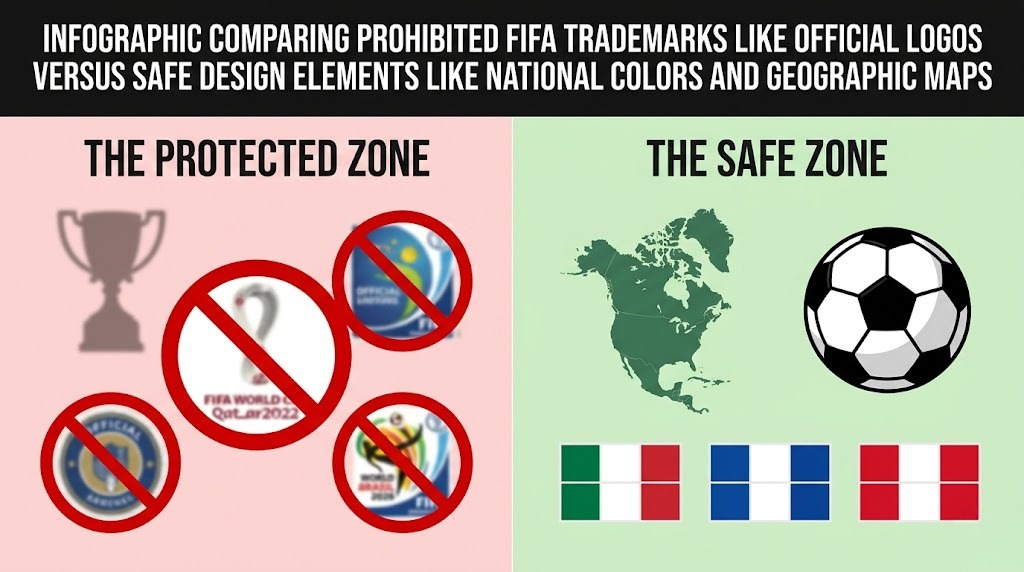
Getting this wrong is costly. A trademark complaint can pull your listing down, freeze your store, or wipe out a product right when it is selling best. So it pays to learn the line before you design anything.
Here is what you cannot use to sell products:
- The words “FIFA,” “FIFA World Cup,” “FIFA World Cup 26,” and “WC26”
- The official FIFA emblem, trophy images, and mascots (Maple, Zayu, and Clutch)
- National team crests and federation badges, like the US Soccer crest or the three lions
- Host city logos and slogans, such as “We are Dallas” or “We are Miami”
- Player names and likenesses, which carry their own personality rights
- Trademarked hashtags in paid posts, even one with “FIFA” or “WorldCup” next to branded content
Here is what is safe to sell:
- Generic soccer images: balls, cleats, goals, nets, pitches, whistles, and scoreboards
- Country flags, since most national flags are public domain
- Country names and national colors, like “Mexico” in green, white, and red
- Name-and-number personalization, where the buyer supplies their own details
- City landmark designs mixed with football elements, such as a skyline crossed with a ball
- Plain terms like “soccer,” “the big game,” “cup,” “fútbol,” and any country name
One smart habit: add a short note to every listing. Something like, “Independently designed fan apparel. Not affiliated with FIFA, any national federation, or any official tournament sponsor.” It shows good faith to both platform reviewers and buyers.
Boost Order Value With Quantity Breaks and Bundles
You worked hard to win that World Cup traffic. But most fans buy one cheap item and leave. A single flag. One $12 mug. That visit cost you money in ads, and a small order barely covers it.
During a six-week spike, those tiny orders quietly drain your margins. You’re paying to bring in a buyer who’s already excited and ready to spend, yet you let them check out with just one item. The window is short, and every single-item cart is a sale you won’t get back once the final whistle blows. Building bundle deals or wholesale tiers by hand also takes time and code you don’t have during the rush.
This is where Pareto Quantity Breaks & Discounts comes in. You set up quantity breaks, volume discounts, BOGO offers, and free gifts in minutes, with no coding. The right offer lands at the right moment and nudges fans to grab a second jersey or a full fan kit. A post-purchase upsell then catches them right after checkout and turns one order into another sale.
Here is what it does for a World Cup store:
- Builds quantity breaks, bundles, and discount stacking that lift conversions and average order value
- Handles B2B wholesale pricing and cart-based discounts for bulk team orders
- Sets quantity and volume discounts by variant, customer tag, or market, so you can target each fan base
- Shows quantity breaks cleanly on mobile and connects with Shopify POS
- Runs A/B tests and tracks the results in one dashboard, with real people on live chat whenever you need help
Set it up before kickoff, and every order has room to grow.
Timing Your World Cup Campaign
The FIFA World Cup 2026 runs from June 11 to July 19, 2026. For sellers, the tournament follows a clear demand curve.
Before any of that, get your store ready in the weeks ahead of June 11. Load your products, write your listings, set up tracking, and test your checkout. The run-up is when you fix problems calmly, instead of scrambling once orders start pouring in.
Weeks 1–2 (Group Stage, mid-June): This is peak impulse-buying time. Fans grab flags, T-shirts, and watch-party gear while excitement runs high. Broad fan apparel in all 48 national colors does well.
Weeks 3–4 (Round of 32 and Round of 16): Demand narrows to the teams still playing. Sellers who can update listings quickly to feature advancing nations ride the wave.
Weeks 5–6 (Quarter-finals to Final, mid-July): Souvenir demand climbs. Fans whose teams reach the late rounds are deeply invested and ready to spend. Commemorative and personalized products shine here.
One more thing to keep in mind. Platform algorithms need time to rank new listings before the tournament starts. So stores that list now will beat stores that wait until kickoff to upload products.
Final Takeaway
World Cup products are one of the clearest seasonal wins available in 2026. The demand is real. Searches are already climbing around terms like “world cup stuff,” “soccer world cup stickers,” and “FIFA world cup product.” And because the event is happening in North America, U.S. shoppers are buying into this cycle at full scale for the first time.
The sellers who win pair smart product picks with solid behind-the-scenes tools. Choose fan apparel, watch-party gear, collectibles, and personalized gifts.