
Back-to-School Marketing 2026: What To Do This Year?
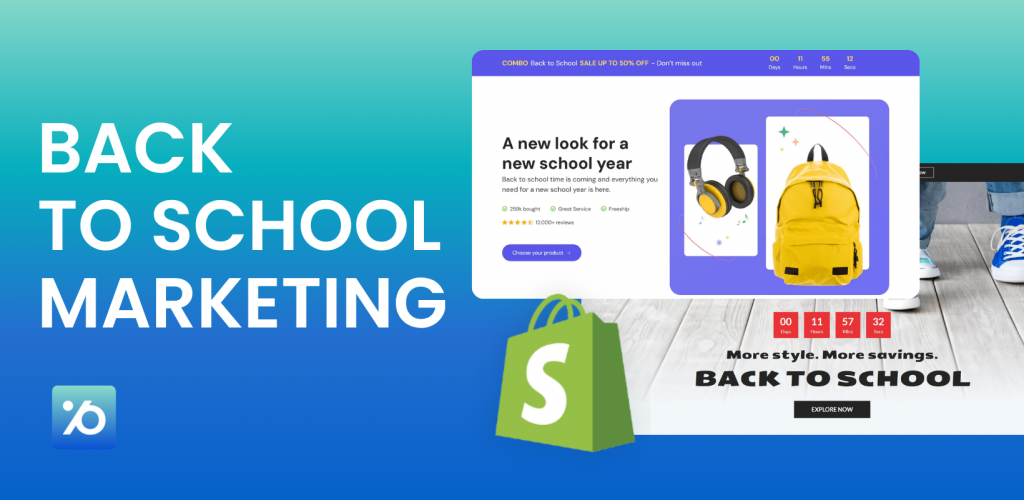
Plenty of online shops treat back-to-school as a quiet stretch before the holidays. They’re leaving money on the table. When the timing and offers line up, back-to-school marketing can pull numbers close to the holiday season, and the shops that move early take the biggest cut. This guide breaks down what works, the data behind it, and a few tools that make each campaign easier to run.
All spending figures in this guide are verified against NRF, Deloitte and Adobe Analytics data as of July 2026.
What is back-to-school marketing?
Back-to-school marketing covers the promotions, discounts, product picks, and content that shops run during the late-summer rush, roughly July through early September. The goal is to win spending from three groups getting ready for a new school year: parents of K–12 kids, college students and their families, and teachers.
It’s bigger than most merchants think. Back-to-school is the second-largest retail season in the US, behind only the winter holidays. It moves $146.8 billion, spans nearly every product category, and each of those three buyer groups shops on its own budget and its own timeline. Treat a back-to-school campaign with the care you’d give Black Friday and you’ll outsell the shops that bolt it on as an afterthought.
One difference worth internalising: Black Friday is a four-day sprint. Back-to-school is a ten-week campaign. That changes what wins – scheduling, sequencing and offer structure matter more than a single deep discount.
Back-to-school 2026 by the numbers
A quick look at the 2025 data shows the size of the prize.
Spending stayed strong. K–12 back-to-school spending hit $39.4 billion, the second-highest total on record after 2023’s $41.5 billion peak. The average K–12 family spent $858.07. (Empower put the per-household figure at $886, up 1.3% from the year before.) College was a separate story at $88.8 billion, with households spending an average of $1,325.85 per college student. That makes college shoppers one of the most valuable groups in all of retail.
US families will spend a record $146.8 billion on back-to-school in 2026 – $43.3 billion for K–12 and $103.5 billion for college. That’s up 14.5% from $128.2 billion in 2025, and it’s the first year college back-to-school spending has crossed $100 billion.
K–12 alone is up 9.9% year over year, beating the previous survey high of $41.5 billion set in 2023 (Retail Dive / NRF).
The honest read: more dollars are moving, but each dollar is being fought over harder. That single sentence is the strategic case for everything below. In a season like this, the shop that wins isn’t the one with the deepest discount – it’s the one whose offer makes the buyer feel like they played it smart.
So where does the money go? The NRF’s K–12 breakdown points straight at the hot categories:
| Category | Average Spend per Family | Total Market Estimate |
|---|---|---|
| Electronics & computers | $295.81 | $13.6 billion |
| Clothing & accessories | $249.36 | $11.4 billion |
| School supplies | $143.77 | $6.6 billion |
| Shoes | $169.13 | $7.8 billion |
Two things changed this year. Shoes now outrank school supplies on per-family spend – a reversal from 2025. And on Deloitte’s read of category momentum, clothing and accessories are up 22% year over year while tech is down 16% and supplies down 2%.
If you sell apparel, footwear or accessories, 2026 is your season. If you sell tech, you’re fighting for a shrinking share of attention and you need the offer structure to do more work.
What 2025 taught us:
- 67% of shoppers began buying in July, up sharply from 55% in 2024. The season had already pulled forward.
- Mobile drove close to 60% of ecommerce sales. A phone-friendly store stopped being optional.
- Google Maps clicks for back-to-school searches rose 76%, and Local Inventory Ad clicks were up 102% year over year – local intent surged alongside online.
- 76% named price as their top deciding factor. Among tight-budget buyers, 54% leaned on discount stores, 51% reused last year’s supplies, and 34% bought only when they spotted a deal.
In 2026 the early-shopping trend cooled slightly: 62% had started by early July, down from 67% – but still well above 2024. The base of early shoppers is holding. What changed is that a bigger slice is waiting on purpose. 46% of shoppers who haven’t finished say they’re holding out for the best deals, and 47% plan to buy only start-of-year essentials and replenish through the year (Chain Store Age).
The calendar: why timing makes or breaks the season
Launching late is the classic mistake. Shoppers move weeks before August.
June is the warm-up. People are thinking about school but haven’t opened their wallets, so it’s the month for content, SEO, list-building, and teasers. By July, the browsing starts in earnest, and two-thirds of early birds are already comparing options, which means your offers and paid social needs to be live by the first week. August is the peak, when most K–12 families finally buy, so flash sales, limited-time deals, and cart-recovery emails earn their keep. September isn’t over, either. Late shoppers, college students, and teachers keep buying, especially electronics and dorm gear.
A simple rule of thumb: plan in April and May, tease in June, go full-throttle by early July, and keep running through September.
| Month | What shoppers are doing | What you should have live |
|---|---|---|
| April–May | Not shopping | Plan the calendar, build the collection, brief creators |
| June | Researching, wish-listing; Prime Day 23–26 June pulls deal-hunters in early | Teasers, list-building, SEO content, and a late-June warm-up offer riding Prime Day traffic |
| July | 62% have started buying; comparison shopping peaks | Full offer set live: bundles, quantity breaks, student/teacher pricing. Paid social on |
| August | Peak K–12 purchasing; most state tax-free weekends land here | Flash sales, countdown timers, cart recovery, low-stock signals |
| September | Stragglers, college move-in, teacher classroom restocking | Dorm and classroom bundles, last-call email, win-back offers |
Prime Day 2026 ran 23–26 June and drove $26.4 billion in US online spend across all retailers, up 9.3% year over year (Adobe Analytics). For comparison, the July 2025 event drove $24.1 billion.
That shift matters more for back-to-school than the headline number does. The deal-hunting spike now lands before most K–12 families start buying, not during. So the 2026 shape of the season is two peaks, not one:
- Late June – ride the traffic. Deal intent is at its highest point of the summer and almost nobody is running back-to-school offers yet. A warm-up bundle here converts browsers who are already in buying mode.
- First two weeks of August – ride the intent. This is when purchase urgency peaks and when most tax-free weekends fall. Save your sharpest flash sale for here.
If you only run one, run August. If you can run both, the June one is the cheaper customer acquisition.
5 plays from the brands winning this season
The biggest retailers all made the same bet in 2026: give shoppers a reason to feel smart, not just a lower number. Here’s what they actually did, why it works, and how to run the merchant-sized version.
| # | Play | Who’s doing it | Why it pays | Run it with |
|---|---|---|---|---|
| 1 | Give a gift, not a discount | Apple | Free outsells % off by 73% | BXGY / Free gift |
| 2 | Make the discount feel earned | Target | College households spend $1,325.85 each | Customer-tag targeting + lifetime limit |
| 3 | Sell the checklist, not the item | Staples | Bundles lift AOV 20–35% | Product bundle / Bought together |
| 4 | Price the pack, not the piece | M&S | Quantity breaks lift AOV 20–30% | Quantity break ladder |
| 5 | Let students make your ads | JanSport, SHEIN | Season with the highest organic UGC | Hashtag + giveaway, UGC on collection page |
Play 1: Give a gift, not a discount
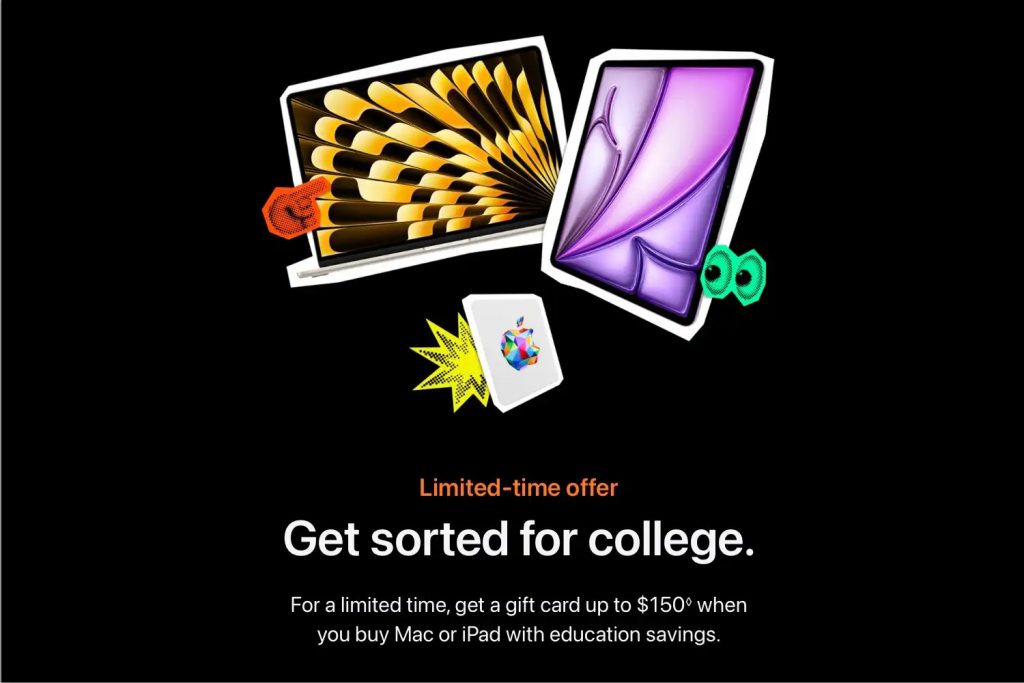
What Apple did. Its 2026 Back to School offer hands students, parents, teachers and university staff a gift card worth up to $150 – $150 with a MacBook Pro, $100 with a MacBook Air, iPad Pro or iPad Air – on top of standard education pricing. Eligibility runs through UNiDAYS verification, and the offer closes 27 August (MacRumors).
Why it pays. Apple isn’t cutting its price. It’s adding value – and the psychology is decisive. Consumers buy 73% more under a “get this free” offer than under a percentage-off deal of equal or slightly better value. Given both side by side, three times as many choose the free-gift version, and 93% have used a BOGO-style offer at least once (Capital One Shopping).
Run it. A free gift with purchase costs you the item’s cost price, not its retail price, and it protects your headline price from anchoring downward. Pick something low-cost with high perceived value – a pencil case with a backpack, a set of markers with a supply bundle. Set it up as a Buy X Get Y offer.
Play 2: Make the discount feel earned
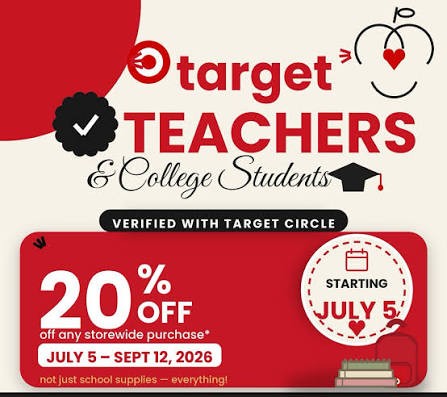
What Target did. Verified teachers and verified college students each get 20% off one storewide purchase, redeemable between 5 July and 12 September 2026, after verifying status in the Target app (Target Corporate).
Why it pays. Two mechanics are doing work here. The verification makes the discount feel like recognition rather than a sale, and the one-use limit protects margin while keeping the offer credible. And it aims at the richest segment in the season: college households spend an average of $1,325.85 per student.
Run it. Tag verified buyers student or teacher — via a .edu domain check, SheerID, UNiDAYS, Student Beans, or a manual check if you’re small – then show that pricing only to those accounts with customer-tag targeting. Add a lifetime limit of one redemption per customer so it stays a privilege rather than a permanent price cut.
Play 3: Sell the checklist, not the item
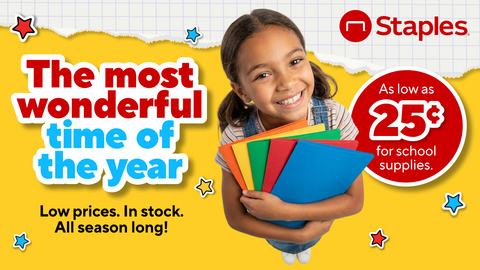
What Staples did. Rather than discount, Staples went into 2026 holding its 2025 prices on core back-to-school essentials, revived its 1996 “The Most Wonderful Time of the Year” campaign, and stacked freebies onto qualifying purchases from 12 July to 12 September (Business Wire). On tech it laddered entry prices instead – laptops from $249.99, monitors from $79.99, earbuds from $4.99.
Why it pays. The message isn’t “we’re cheap,” it’s “you don’t have to think about price this year.” That’s aimed squarely at the parent staring at a 15-item teacher list who does not want to price-check 15 products.
Run it. The merchant version of a price-hold is the bundle: one box that covers the list, at a price the buyer doesn’t feel the need to audit. Themed, problem-solving bundles – a teacher’s “Complete Classroom Kit,” a “First Day Pack,” a “Dorm Move-In Box” – outperform generic multi-packs because they map to a job the buyer already has.
Play 4: Price the pack, not the piece
What Marks & Spencer did. Marks & Spencer has now held its school-uniform prices flat for five consecutive years, since 2021, and sells the core items in multi-packs rather than singles (M&S Corporate).
Why it pays. Uniform is the definition of a multi-unit purchase – nobody buys one shirt. Pricing the pack rather than the piece removes the mental arithmetic and moves more units per order. Quantity breaks lift average order value 20–30%.
Run it. Build a ladder on your highest-repeat products and show it on the product page so shoppers can see they’re one item from the next tier. Keep the top tier reachable: 10 items works for cheap supplies, but for pricier goods a 3- or 5-item top tier converts better because buyers can actually picture hitting it.

Play 5: Let students make your ads
What JanSport and SHEIN did. Both leaned on TikTok – backpack tours, dorm hauls, #back2school unboxings – and let customers generate the creative.
Why it pays. Back-to-school produces more organic user content than any other retail moment. Parents post first-day photos, students film room setups, teachers show off classroom shelves. That content carries trust paid ads can’t buy.
Run it. A branded hashtag plus a gift-card giveaway is enough to start it. Then do the part most brands skip: feature the best submissions on your collection page. UGC on the page where people decide is worth more than UGC on the feed where they scroll.
Top back-to-school marketing strategies
If you’re short on time, work down this table. The top four cover most of the upside.
| Strategy | Impact | Effort | The number that matters |
|---|---|---|---|
| Sell bundles | High | Low | +20–35% AOV |
| Add quantity breaks | High | Low | +20–30% AOV |
| Student & teacher pricing | High | Medium | $1,325.85 per college student |
| Run flash sales | High | Medium | Offer in the subject line converts far harder |
| Send an email series | High | Medium | 6 emails, late June → September |
| Recover abandoned carts | Medium | Low | One recovered cart = one full bundle |
| Build a back-to-school collection | Medium | Low | 62% start shopping before July ends |
| Run paid ads | Medium | High | Mobile drives ~60% of sales |
| Lean on social and creators | Medium | High | Book creators 6–8 weeks out |
Build a back-to-school collection
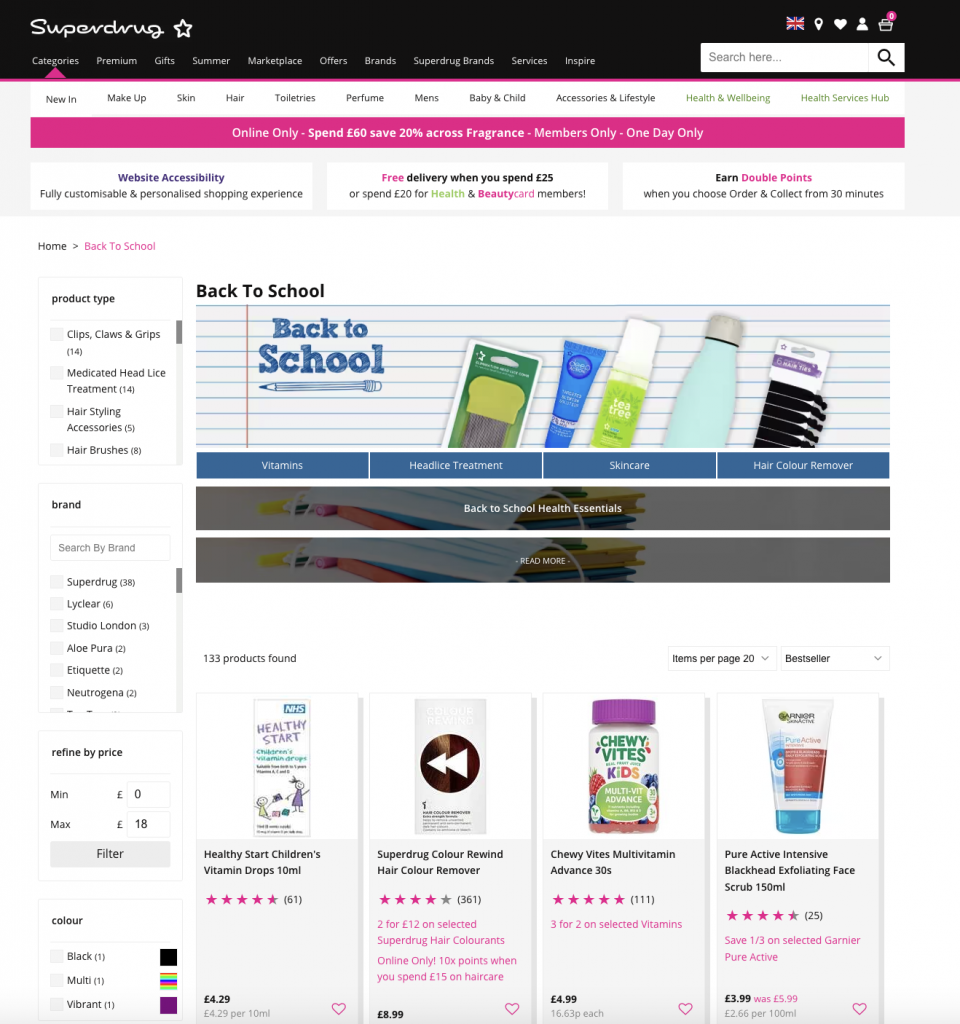
Sort the store before you run a single promotion. With 62% of shoppers starting before July ends, the collection page needs to exist before your first offer does.
Group relevant products into one back-to-school collection that’s easy to browse, then split it into sub-collections by stage: “Elementary Essentials,” “Middle School Must-Haves,” “College Dorm Pack,” “Teacher Classroom Setup.” Smaller, clearer groups help shoppers decide faster.
Feature the page in main navigation and homepage banners. Write product descriptions that say how each item fits the school year. Link to the collection from every email and ad. And show your quantity-break pricing on the collection page itself so the offer is visible at the browsing stage, not just the product stage.
Sell back-to-school bundles
Bundles are the strongest play of the season because they fix its biggest headache: long supply lists. A parent doesn’t want to dig through 15 product pages to check off a teacher’s list. They want one box that covers it, at a fair price.
The numbers favor bundling. A good product bundle lifts average order value by 25% to 35%. Seasonal kits tap into a clear moment and make easy social content. And themed, problem-solving bundles, like a teacher’s “Complete Classroom Kit” or a kid’s “First Day Pack,” build the kind of loyalty that brings shoppers back next year.
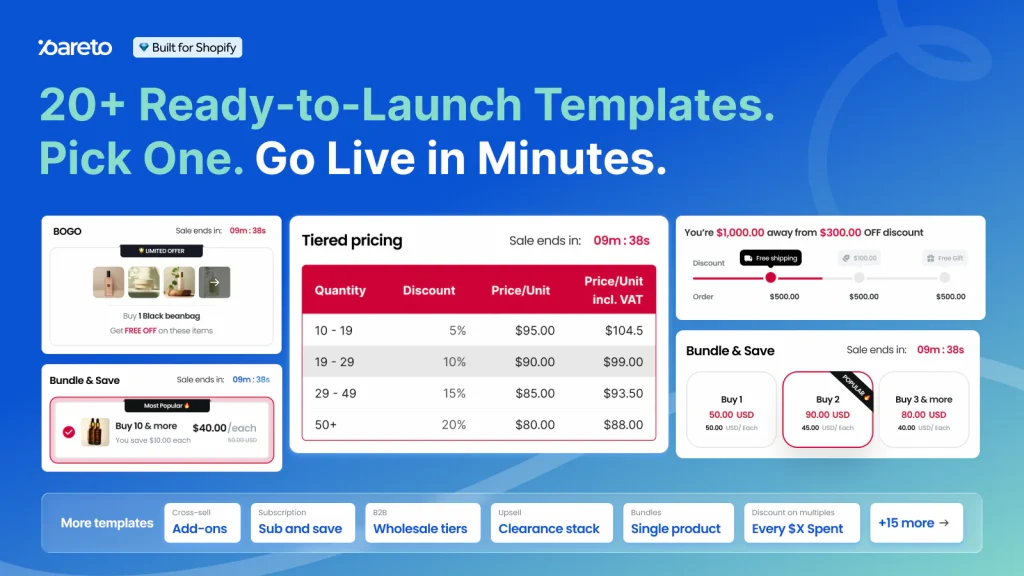
You can set these up on Shopify without touching code using Quantity Breaks & Discounts by Pareto. It runs Bundle, BOGO (Buy One, Get One), BXGY (Buy X, Get Y), and Volume Discount campaigns. Pick the products or collections you want, choose the discount type (percentage, fixed amount, or set price), and style the widget to match your shop. You can also schedule each campaign to start and stop on its own, so your whole bundle calendar can be built in advance and left to run. The app works with all modern themes, and it can show different tiers to different shoppers through customer tags, so wholesale buyers or verified students see their own pricing while everyone else sees standard rates.
One pricing note: set the bundle below the combined price of its items but above your margin floor. The savings should feel real to the buyer while you still clear a profit on every box.
Add quantity breaks
Families buy in multiples during this season – several notebooks, a pack of pens, a few pairs of socks – and quantity breaks reward that by lowering the per-unit price as the cart grows. Shops that use them typically see average order value climb 20–30%.
A supply-store ladder might run like this:
- 1 – 2 items: standard price
- 3 – 4 items: 10% off
- 5 – 9 items: 15% off
- 10+ items: 20% off
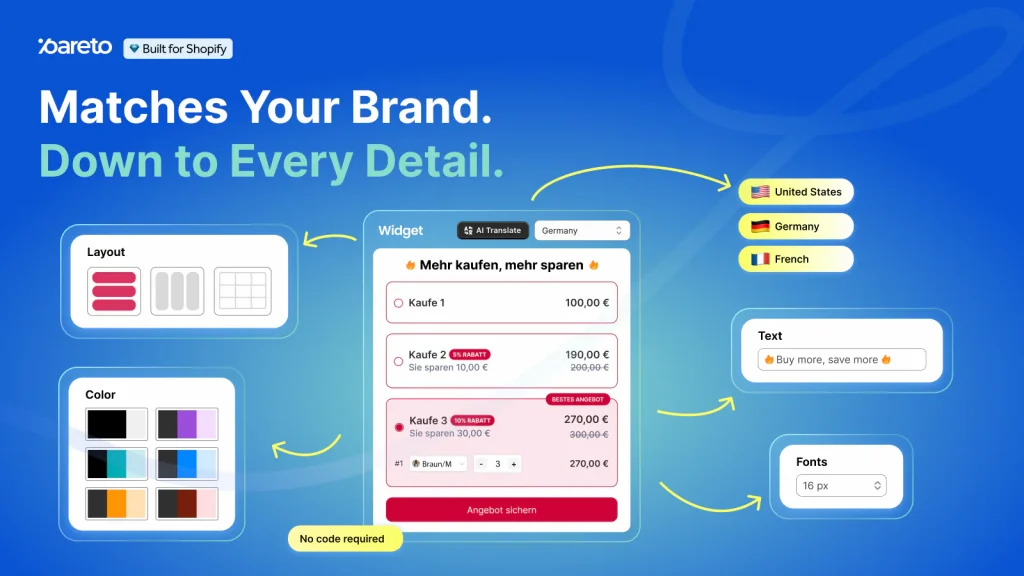
Pareto shows the ladder right on the product page, so a shopper can see they’re one item away from the next tier – that nudge alone tends to grow carts. You can flag a “Most Popular” tier to pre-select the size you’d rather sell. New this year: the ladder can also render on collection pages, so shoppers see the 3+/5+/10+ pricing while they’re still browsing rather than discovering it after a click.
Keep the top tier within reach. A 10-item threshold makes sense for cheap supplies, but for pricier goods, a 3- or 5-item top tier converts better because buyers can actually picture hitting it.
Offer student and teacher discounts
A discount aimed at verified students or teachers lands harder than a generic sale because it feels earned. Knock 20% off a laptop or tablet for students, make redemption painless with a code or email check, and you’ve got a real edge in a category where everyone’s competing on price.
On Shopify, tag a buyer student or teacher once verified, then use Pareto’s customer-tag targeting to show that pricing only to those accounts. Verify with a school email domain, a service like SheerID, UNiDAYS or Student Beans, or a quick manual check if your store is small. Put the offer where people will see it — homepage, product pages, email. A deal that’s a hassle to claim is a deal people walk away from.
Pair it with a lifetime limit of one redemption per customer, the same way Target does. That’s what keeps the margin intact.
Run flash sales
A short, sharp sale creates the pressure that moves hesitant shoppers – and in 2026 the two windows that matter are late June (Prime Day spillover) and the first half of August (peak intent plus tax-free weekends).
What works:
- Put the offer in the subject line. Emails that name the discount outperform generic promo sends by a wide margin. “20% off your supply list – 48 hours” beats “Our back-to-school sale is here.”
- Use scarcity cues. Limited stock and countdown clocks can raise conversions by up to 30%.
- Match the window to the product. 2–3 hours for small impulse buys; 6–12 hours for electronics, which take longer to decide on.
Three formats that work: a 48-hour “Back-to-School Prep Weekend” on your top bundles, a “First 100 Orders Save 25%” that pairs scarcity with a deadline, or a daily August countdown featuring one deep deal per day.
Pareto ships the display layer for all of it: promotion badges, countdown timers, and a sitewide banner you can turn on without a designer.
Send an email series, not a blast
Email still earns some of the best returns of the season, but the single mass send is the wrong shape for a ten-week campaign. Run a six-part series:
- Mid-June: Teaser – a peek at what’s new
- Week of 22 June: Deal-hunter alert – ride Prime Day week traffic
- First week of July: Launch – best bundles, biggest discounts
- Mid-July: Personalised – supplies to supply buyers, gadgets to tech buyers
- Your customers’ tax-free weekend: Flash – short window, deep cut, clear deadline
- Mid-August + early September: Last call, then a September follow-up for college and teachers.
Segment your list into early planners, late shoppers and the undecided, and you can speak to each group where they actually are.
Lean on social and creators
Few retail moments are as shareable as back-to-school – and the content mostly makes itself. Short videos on TikTok and Instagram Reels (backpack tours, supply hauls, setup time-lapses) reach students and younger parents. Pinterest searches climb through late June and July, so shoppable pins linking to your collections pay off.
Don’t overlook your own customers. A branded hashtag plus a gift-card giveaway gets people posting their hauls, and featuring that content on your product and collection pages builds trust in the exact place people decide.
Line up creator partnerships six to eight weeks out, so there’s time to make content and warm up their audiences.
Run paid ads
Organic reach only goes so far when every shop is fighting for the same attention in July and August. Google Shopping is the obvious start – your product photo, price and store name appear right in results, so shoppers compare and click without digging. Performance Max casts wider, running one campaign across Search, Shopping, YouTube, Gmail and Display.
Three things make these pay off: clean up your product feed first (clear titles, sharp images, accurate prices – the feed is what the ads pull from); launch two to three weeks before your peak so the system has time to learn; and feed it real sales data, not just clicks, so it optimises toward orders.
Don’t ignore local. In 2025, Google Maps clicks for back-to-school searches rose 76% and Local Inventory Ad clicks were up 102% year over year.
Recover abandoned carts
Cart abandonment spikes during a seasonal rush, and it spikes hardest on mobile – which drives close to 60% of back-to-school ecommerce sales. A simple recovery flow brings a meaningful share of them back.
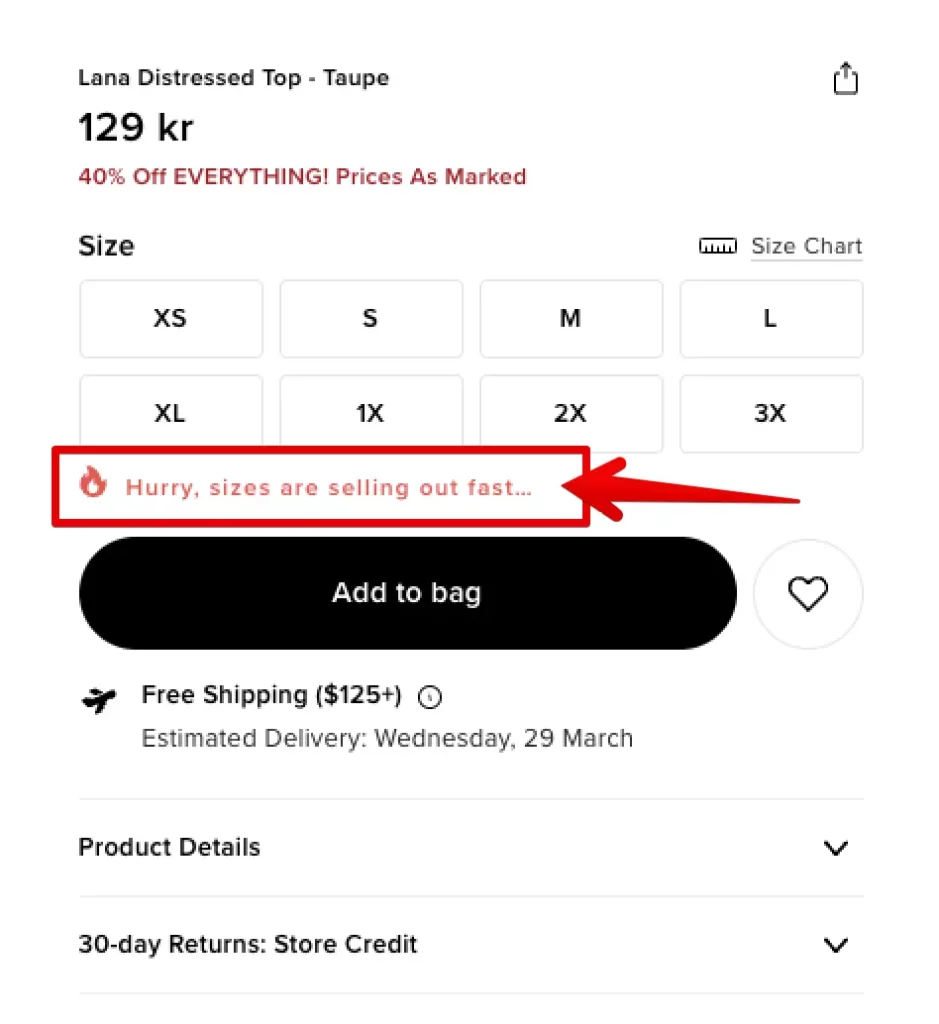
Set up automated emails or texts on a schedule: a gentle reminder within an hour, a second nudge the next day, and a small push like free shipping on the third if they still haven’t bought. Keep the message specific to what they left behind – “Your First Day Pack is still in your cart” beats a generic reminder, and a low-stock line such as “only a few left at this price” gives a reason to act now.
During back-to-school a recovered cart is often a full bundle, so each save is worth several times a normal recovery. Pareto’s side-cart recommendations help before the abandonment happens: “one more notebook and you unlock 15% off” is a reason to complete rather than a reason to leave.
Run a record season without the manual work
Nine strategies is a lot of setup for a team that also has to ship orders. Both our Pareto apps exist to compress that setup – one grows the cart, the other protects what’s in it.
Bigger carts from the same traffic
Pareto Quantity Breaks & Discounts is the offer engine for the season. What it does, and the number behind each:
- Bigger carts, same traffic. Bundles (+20–35% AOV), quantity breaks (+20–30%), and cart-value tiers that reward spending more rather than buying more units.
- Free gifts outsell discounts. BXGY and free-gift offers – the mechanic that beats percentage-off by 73%.
- Premium buyers, premium prices. Customer-tag targeting for student, teacher and wholesale segments, so the discount reaches the people it’s meant for and your margin doesn’t bleed everywhere else.
- Build the calendar once. Scheduled activation turns campaigns on and off from late June through September without you logging in. Countdown timers add the scarcity cue that lifts conversions up to 30%.
- Squeeze more after checkout. Checkout and post-purchase upsells turn each order into one more sale.
- Know what’s working mid-season. A/B test widget layouts and track revenue per campaign in the dashboard, so August’s offers are informed by July’s data.
Every offer ships with the display layer: banners, promotion badges, countdown timers, collection-page pricing tables and side-cart recommendations, all styled to match your theme.
Pricing: Start free with 1 active offer. Basic $11.99/mo for 5 offers, scheduling and A/B testing. Professional $24.99/mo for unlimited offers plus BXGY, free gifts, product bundles, import/export and unlimited post-purchase upsells. Advanced $39.99/mo for multi-product bundles, Shopify Plus checkout upsells and automatic large-order discounts. Annual billing saves 15%.
Note the free and Basic plans include revenue caps ($300 and $1,000 of Pareto-attributed extra revenue). For a season running six to eight campaigns at once, Professional is the realistic starting point – and one extra bundle a month covers it.
Switching apps takes minutes, not a weekend
Worried it’s too late to switch apps before the season? It isn’t.
Pareto’s Import Campaigns turns migration into a CSV upload: download the template, paste in your rules, drag, drop, review, activate. Everything imports as Inactive, so nothing goes live until you say so. Up to 100 rules per batch – and if your setup is bigger than that, ping live chat and the support team will migrate it for you. You don’t migrate; we migrate for you.
Sidekick can walk you through the import and export step by step if you’d rather not read a doc.
Keep the margin you just made
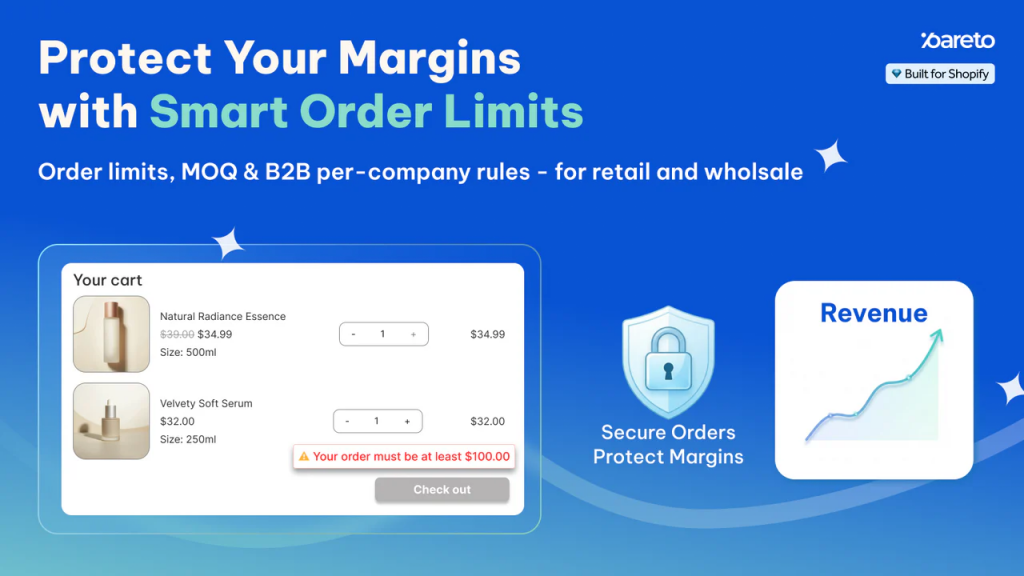
Deep discounts pull big traffic. Without caps, one reseller clears your flash-sale stock in an hour – leaving nothing for the customers you meant to reach and making your “limited” tag look fake.
Picture a “Teacher Appreciation Pack” at 30% off, or a “$99 Student Tech Kit.” Pareto ‑ Order Limits Quantity handles the guardrails at checkout, with no code:
| Feature | How it helps in back-to-school |
|---|---|
| Min/max per order | Cap a bundle at 2–3 per order, so no one bulk-buys the flash price |
| Daily caps per product | Limit how many “First Day Packs” sell each day to keep them special |
| Discount usage limit | Set usage limits, customer limits, and discount rules to keep your back-to-school promotions fair, effective, and within budget. |
| Lifetime limits | Stop one buyer from placing repeat orders to game a “first 100” deal |
| Scheduled activation | Turn caps on and off automatically when a sale starts and ends |
| Low-stock counter | Show “Only 8 left at this price” to signal real scarcity |
| Strict checkout checks | Hold the line even on Shop Pay and Apple Pay |
There’s a free plan, with paid tiers at $8.99 (Basic), $19.99 (Advanced), and $29.99 (Plus) a month. In a season this competitive, that kind of control can be what separates a profitable promotion from one that quietly bleeds margin.
Quantity Breaks gets more into every cart. Order Limits makes sure no single cart wrecks your stock or your margins. Together they run the offense and the defense of a $146.8 billion season.
14 copy-paste Shopify Sidekick prompts to run this guide
Every offer in this guide can be built by pasting one sentence into Shopify Sidekick. Sidekick already knows your catalog, sales history and inventory, so the prompts below ask it to pick the products, audience and discount levels for your store, then draft the campaign in Pareto and wait for you. Nothing publishes until you hit Save.
Sidekick is available to every Shopify merchant worldwide, on every plan, in 20 languages – it’s the purple icon in your admin, no setup required.
Build the offers
1 · Back-to-school bundle (+20–35% AOV) To build a themed bundle from your own catalog, paste this into Sidekick:
Using Pareto Quantity Breaks, review my catalog and suggest 3 to 5 products that
would sell well together as a back-to-school bundle. Recommend a bundle price that
protects my margin, then draft the offer for my review.
2 · Quantity break ladder (+20–30% AOV) To build tiered per-unit pricing on the products your customers already buy in multiples:
Using Pareto Quantity Breaks, find the collections where my customers usually buy
multiple units and suggest a quantity break ladder (like 3+, 5+, 10+) with discount
levels that fit my margins. Draft it as a back-to-school offer scheduled from
July 15 to September 5.
3 · Free gift with purchase (+73% vs % off) To add a gift instead of cutting your headline price:
Using Pareto Quantity Breaks, suggest a low-cost, high-perceived-value product from
my catalog to add as a free gift when customers buy from my best-selling
back-to-school collection. Then draft the Buy X Get Y offer for my review.
4 · Student and teacher pricing ($1,325.85 per college student) To show verified-only pricing to tagged customers:
Using Pareto Quantity Breaks, set up a student and teacher discount: suggest which
of my collections fit student buyers best, recommend a discount level, and apply it
only to logged-in customers tagged "student" or "teacher". Draft it for my review.
5 · Cart-value tiers To reward bigger baskets rather than more units:
Using Pareto Quantity Breaks, look at my store's average order value and suggest two
or three order-value discount tiers that would push customers to spend more. Draft
the offer for my review.
6 · Flash sale with a countdown (+30% from scarcity cues) To run a weekend flash sale on the right products:
Using Pareto Quantity Breaks, suggest which products should headline a 48-hour
back-to-school flash sale based on my sales and stock levels. Draft the discount
with a countdown timer, running this Friday 8am to Sunday midnight.
7 · Clear slow inventory To move stock before the school year starts:
Using Pareto Quantity Breaks, find my products with the highest inventory and draft
a discount that clears them before the school year starts.
Protect the margin
8 · Block resellers To stop bulk-buying on discounted items:
Using Pareto Order Limits, review my back-to-school offers and suggest purchase
limits that stop resellers from bulk-buying the discounted items.
Draft the rules for my review.
9 · Make “first 100” actually limited To enforce one claim per customer:
Using Pareto Order Limits, set a limit so each customer can claim my back-to-school
promotion only once, and recommend any other rules that protect a "first 100 orders"
style deal.
10 · Audit your rules before the rush To find conflicting limits before they cost you an order:
Using Pareto Order Limits, list every limit that currently applies to my Back to
School collection and flag any overlapping or conflicting rules.
Mid-season checks
11 · Find your winners
Which of my Pareto discount campaigns drove the most revenue in the last 30 days?
12 · Fix your laggards
How can I improve the conversion rate of my Pareto back-to-school campaign?
Suggest changes based on my store's performance data.
Migration
13 · Import your existing campaigns
Walk me through importing my discount campaigns into Pareto from a CSV file.
14 · Back everything up first
Export all my current Pareto offers so I can back them up before the
back-to-school sale.
More on how this works: Sidekick × Quantity Breaks · Sidekick × Order Limits
5 ready-made Shopify Flow templates that run the season for you
Pareto Quantity Breaks ships with ready-made Shopify Flow templates. No building, no logic trees – open Shopify Flow, search “Pareto” in the template gallery, and switch them on before the rush.
| Template | What it does for back-to-school |
|---|---|
| Pause discounts on low-stock bestsellers | Stops the flash sale burning margin on products about to sell out – and stops you selling what you can’t ship |
| Upcoming campaign expiry alert | Keeps the July–September calendar continuous, so a campaign that’s still performing doesn’t quietly switch itself off |
| Auto-discount slow-moving products daily | Automated clearance every day – the autopilot version of prompt #7 |
| Instant win-back offer after refund | Returns spike in this season (wrong size, wrong colour). Every refund becomes a shot at a second order |
| Tiered clearance for expiring inventory | Dated stock discounts itself across three urgency tiers, starting 60 days out |
Two more native Flow recipes worth adding: auto-tag customers with a .edu email as “student”, so your verified student pricing runs itself; and tag back-to-school buyers bts-2026, so next year’s segment builds itself for free.
Get Start Now
Back-to-school rewards planning, not a last-minute scramble. With $43.3 billion in K–12 spending and a first-ever $103.5 billion from college shoppers – $146.8 billion in total, up from $128.2 billion in 2025 – the money is on the table.
The shops that take their share start early, build the store around how people actually shop, and pick the right mix of offers. Keep it simple: collections sorted by stage and need, bundles that clear the supply-list hurdle, quantity breaks that grow carts without gutting margin, order limits that guard your stock, and an email-and-social push that runs from late June into September.
Keep it simple: collections sorted by grade and need, bundles that clear the supply-list hurdle, quantity breaks that grow carts without gutting margin, order limits that guard your stock, and an email-and-social push that runs from June into September.
But 2026 has one extra advantage the last few seasons didn’t. You no longer have to build any of it by hand. Pareto Quantity Breaks and Order Limits both take plain-English instructions through Shopify Sidekick, and both ship Flow templates that keep running while you’re doing something else.
Read More: Summer Promotion Ideas [2026 Trends Updated]