
2026 Q3 recap: Pareto Quantity Breaks doubled AOV lift to 51.49%
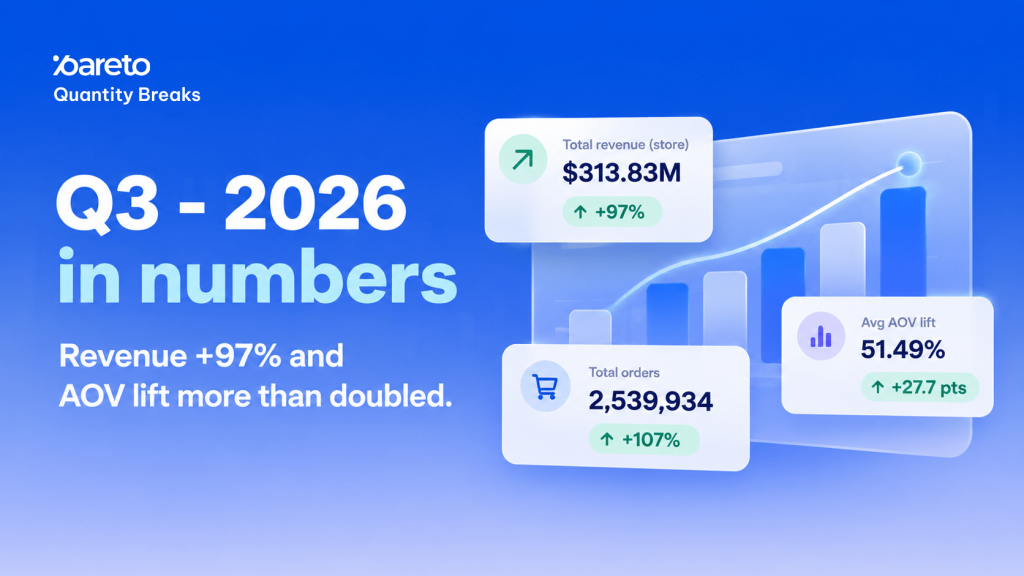
Q3 2026 was a breakout quarter for the Pareto Quantity Breaks merchant network. As more Shopify brands moved tiered offers from a nice-to-have into the center of their merchandising, the results compounded – the average offer-driven AOV lift more than doubled, orders running a Pareto offer grew nearly six-fold, and the app added another $6.46M in extra revenue.
For growing stores, the lesson of the quarter is a familiar one, now backed by harder numbers: you don’t need deeper discounts to grow order value – you need better-structured offers, placed earlier in the journey, working on more of your traffic. Here’s what Q3 looked like across the network, and how to turn it into a stronger Black Friday / Cyber Monday.
AOV Performance
The headline of the quarter: the average offer-driven AOV lift jumped from 23.75% to 51.49% – a gain of 27.7 points, or 2.2×. In plain terms, shoppers who were shown a Pareto offer spent roughly 51% more than shoppers who weren’t.
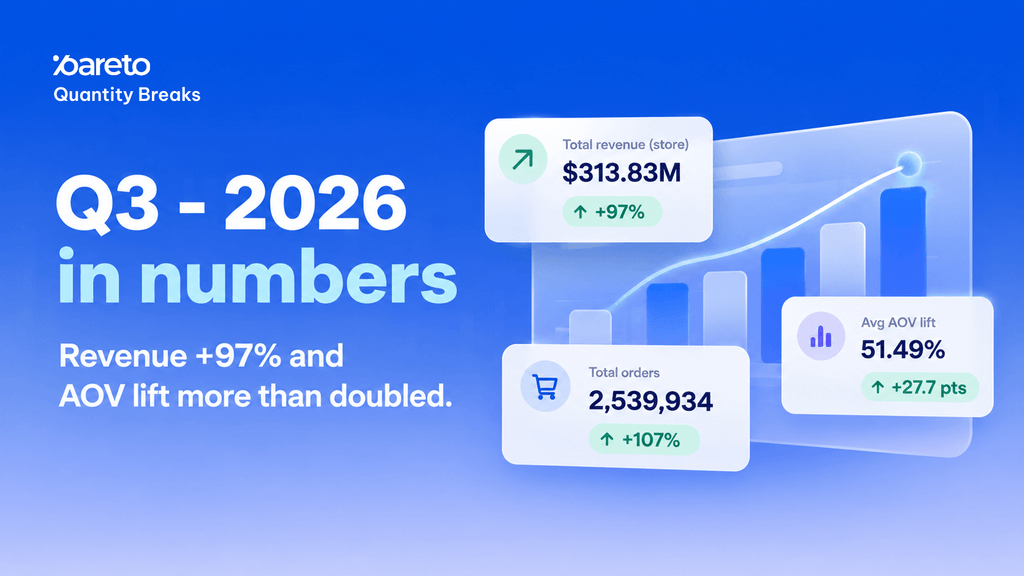
Store AOV softened as the sample broadened, while offer-driven AOV lift strengthened significantly.
The slight dip in raw store AOV reflects a wider, more diverse set of stores entering the sample this quarter – not weaker performance. The metric that actually measures Pareto’s impact – how much more shoppers spend when they see an offer – moved sharply in the right direction.
Revenue Performance
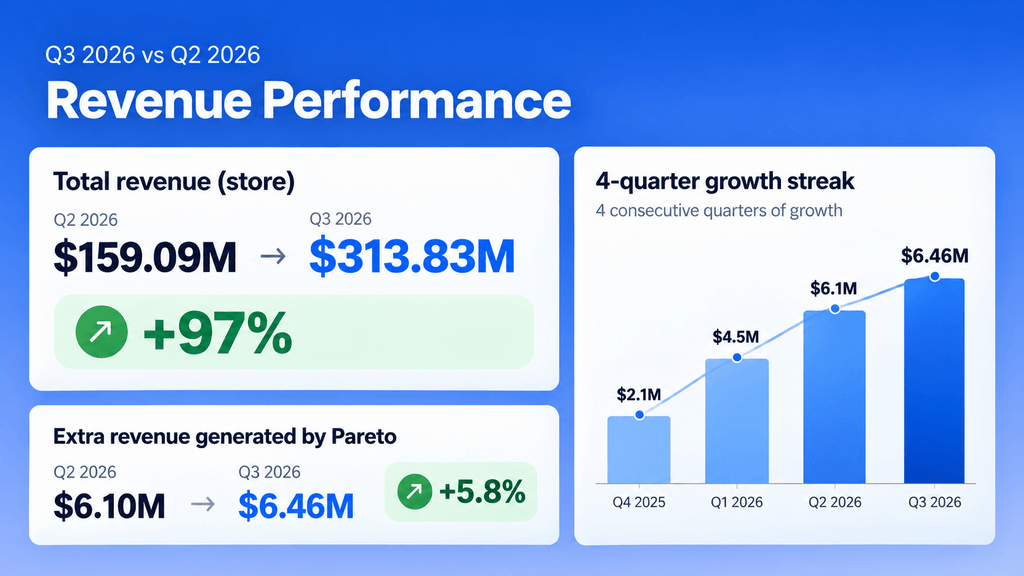
Revenue told the same story at scale. Total store revenue across the network nearly doubled, and the extra revenue generated directly by Pareto offers climbed to a new high – the fourth consecutive quarter of growth.
Order & Offer Activity
Adoption didn’t just widen – it deepened. Total orders more than doubled, but the standout figure is the number of orders actually carrying a Pareto offer, which grew nearly six-fold.
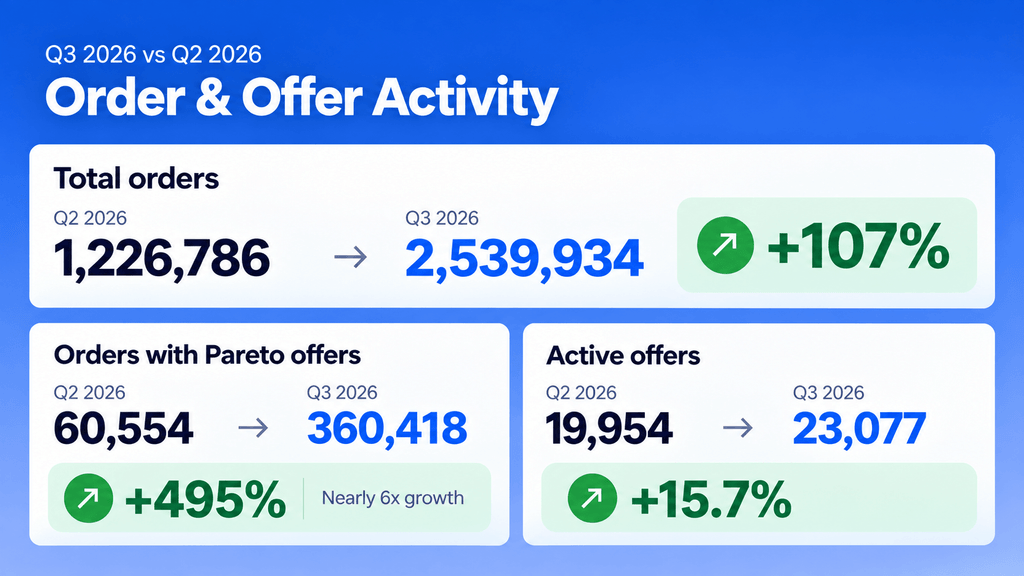
That gap is the real signal of the quarter. Active offers grew a healthy 15.7%, but orders running an offer grew nearly 6× — which means merchants aren’t just installing the app and setting one offer live. They’re putting offers in front of far more of their traffic, across more products and more of the buyer journey.
Three signals worth remembering
- Offer-driven AOV lift doubled. From 23.75% to 51.49% – clear proof that well-structured tiers move order value far more than the raw discount alone.
- Usage got deeper, not just wider. Orders with an offer grew nearly 6× while active offers rose 15.7% – merchants are running the app harder on the traffic they already have.
- Growth is compounding. Extra revenue rose for the fourth straight quarter, reaching nearly $19M cumulatively since Q4 2025.
The Q3 playbook: the setups top merchants are running
The stores posting the biggest lifts kept coming back to the same handful of features. If you’re deciding where to focus next, these are the setups worth testing first:
“Multiples of 2” quantity tiers
Reward shoppers for buying in 2s, 4s, 6s, and 8s, with the per-unit price dropping at each step versus buying singly. It’s the simplest way to make “add one more” feel like the smart choice – and it works especially well for consumables, multipacks, and gifting.
Collection-page badges + countdown timers
Surface the offer and its deadline before shoppers even reach the product page. Showing the tier savings and a live timer right on the collection grid gets customers browsing with a bigger basket in mind from the first click.
AI Insights
Let Pareto Quantity Breaks analyze your store data and recommend the tier structure and offer mix most likely to lift revenue – so you’re optimizing from data, not guesswork.
AI Frequently Bought Together
Automatically suggest the complements most likely to be added alongside the current product – a natural, relevant nudge that helps carts reach the next discount tier.
“Today’s Deal” page
Give your best offers a dedicated, shoppable home. A daily-deal page concentrates demand, creates a reason to come back, and is perfect for rotating seasonal promotions.
In-cart recommendations
Suggest the perfect add-on right inside the cart drawer, so shoppers can seamlessly hit the next tier without interrupting their checkout flow.
Insights for BFCM 2026
Black Friday and Cyber Monday compress a huge amount of demand into a few days – and send paid acquisition costs sharply higher. That makes on-site order value, not just traffic, the deciding factor for holiday profitability. Everything Q3 proved points to the same conclusion: the stores that win BFCM 2026 are the ones turning these levers up now, not during the rush. Here’s how to apply the quarter’s lessons:
- Lead with tiers, not sitewide % off. Q3 showed structured tiers lifting AOV by 51% – a far better margin trade than a blanket markdown. Build your BFCM offer as a volume ladder, and reserve deep cuts for your highest tier.
- Schedule campaigns early. Set launch and end dates in advance so your offers go live automatically the moment traffic peaks – no manual, last-minute changes while the store is busiest.
- Put badges + timers on collection pages. During peak traffic, urgency and clarity up front convert browsers faster – make the deal and its countdown impossible to miss.
- Grow baskets with AI, when every click costs more. Turn on AI Frequently Bought Together and in-cart recommendations so each visit yields more units – the cheapest revenue you’ll find over BFCM.
- Run a “Today’s Deal” page for daily drops. Rotate a fresh headline offer each day of Cyber Week to bring shoppers back and keep momentum through the weekend.
- Use “multiples of 2” for gifting. Holiday shoppers buy for more than one person – a “buy 2, buy 4” ladder meets that intent and lifts units per order.
- Let AI Insights reallocate mid-event. Check it daily during BFCM and shift emphasis toward whatever offers are performing best while the event is still live.
Set Up Your BFCM Offers
Q3 showed just how much structured offers can lift order value – the average AOV lift doubled, and merchants running offers deeper saw the biggest gains. With Black Friday and Cyber Monday approaching, now is the time to build sharp, automated campaigns that capture maximum value from holiday shoppers.